-(1).jpg)
-2.jpg)
.jpg)


Why Kenyan Men are Flocking to ‘Traditional’ Herbal Clinics for Masculinity Solutions
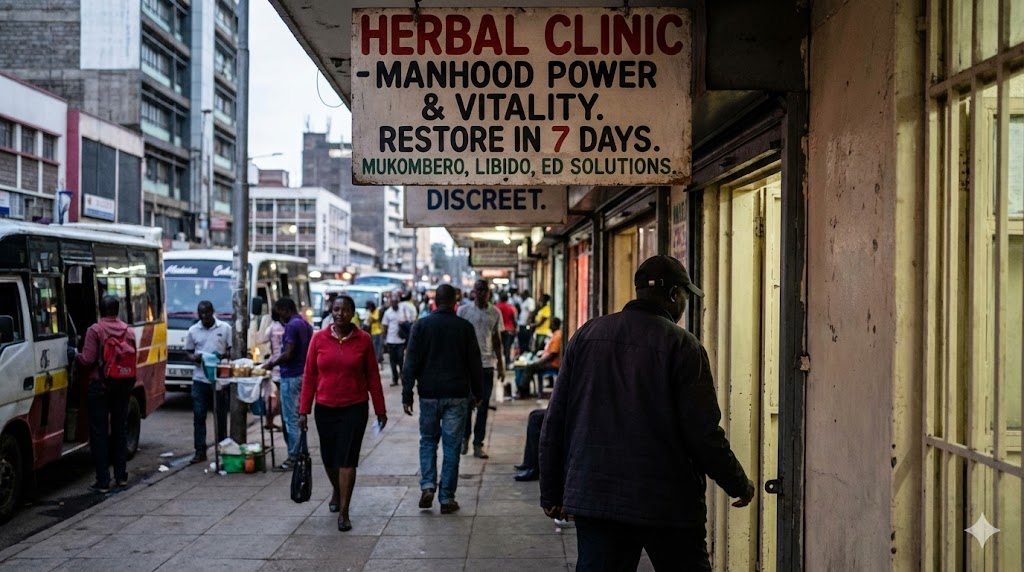
Walk through Nairobi’s CBD and you cannot miss them. Faded posters and glowing signs line every street corner promising “Restore Your Manhood in 7 Days,” “Mukombero Power for Real Men,” or “Short Gun Fixed Here.” You know the ones. These herbal clinics blend traditional medicine with bold claims about reviving masculinity and fixing men’s health issues like erectile dysfunction, low libido, and premature ejaculation. From Kayole to Githurai, Murugu Herbal Clinic to roadside neem stalls, men slip inside quietly, carrying cash and quiet desperation. This is not fringe culture. It reflects a booming industry responding to real pain points in Kenyan lives.
More than 70 percent of Kenyans turn to traditional medicine for primary care, and for men facing masculinity pressures, the pull feels even stronger. Hospitals feel distant, expensive, and judgmental. Herbalists offer privacy, affordability, and cultural familiarity in a moment when modern stresses chip away at traditional male identity.
The silent epidemic: ED haunts Kenyan men
Erectile dysfunction strikes Kenyan men hard, especially those battling hypertension, diabetes, or urban stress. Among hypertensive males, over 94 percent report some form of ED, ranging from mild to severe. Men in their 40s pack urologist clinics, driven by sedentary office jobs, junk food diets, financial pressure, and chronic illnesses that quietly erode bedroom confidence.
Yet hospitals see only a fraction of the cases. Stigma blocks the door. Masculinity in Kenya demands stoicism. Admitting ED feels like confessing weakness, especially when fertility, family legacy, and social status all tie back to sexual prowess. Men fear long queues, female nurses asking intimate questions, consultations costing KSh 1,000 to 3,000, and the cold clinical vibe that makes vulnerability feel like defeat.
Online forums capture the mood. Kenyan men share stories of avoiding “overcharging” facilities, preferring discreet chemists or healers who understand without judgment. The shame runs deep, rooted in cultural expectations that paint the strong man as unbreakable provider and bedroom champion.
Herbal clinics: discreet, cheap, culturally right
Herbal clinics fill that gap perfectly. Pop into one for KSh 500 consultation. Walk out with mukombero capsules, mulondo roots, or T9 pills promising girth, stamina, and libido revival, all for around KSh 1,900 per course. These remedies draw from East African plants like Mondia whitei and Citropsis articulata, used for generations to treat impotence and boost energy.
Why do men flock here? Accessibility comes first. No three‑hour hospital waits. Male herbalists who get the cultural code. Evening hours for after‑work visits. Pay with cash, M‑Pesa, or even barter a goat if you are upcountry. Herbs feel safer than blue pills with their side effects and stigma.
Cultural trust seals the deal. Maasai elders and coastal healers pass down recipes. Nairobi backyards grow over 250 medicinal plants. Mukombero sells out at health fairs, backed by research showing libido and mood benefits. Online testimonials glow with success stories, even if warnings about fake mixes linger in the comments.
What it reveals about Kenyan masculinity
This herbal boom exposes cracks in modern Kenyan manhood. Urban hustle, job insecurity, shifting gender roles, and contraceptive pushback all strain masculinity. Men resist pills that symbolise infertility. Mental health stigma keeps stress bottled up, worsening physical symptoms. Performance anxiety feeds a vicious cycle in a culture that equates bedroom failure with personal collapse.
Herbal clinics do more than sell roots. They restore dignity without the shame of hospital records or awkward family questions. A man walks in diminished, leaves feeling reclaimed. But dangers lurk. Unregulated mixes cause worse impotence or liver damage. Adulterated products spike with sildenafil for fake potency. Quacks prey on desperation while genuine healers struggle for legitimacy.
Risks, hopes, and the way forward
Herbal clinics thrive because the system fails men. Hospitals need male‑only hours, subsidised men’s health checks, and stigma‑busting campaigns. Male‑friendly clinics already lift checkup rates by nearly 20 percent. Urologists report doubled appointments as awareness grows.
The CBD signs mocking desperate men are no joke. They are symptoms of a masculinity crisis demanding real solutions, from regulated traditional medicine to open conversations about vulnerability. Until hospitals match herbalists on trust and access, those “manhood power” posters will keep drawing steady crowds of Kenyan men chasing quiet restoration.