


-(10).jpg)
The global population clings to a comforting lie that sports represent the ultimate meritocracy. We are told that on the pitch, the track, or the court, your background and bank account vanish, leaving only raw talent and work ethic to decide the victor. This is a fairy tale designed to keep the ticket holders paying and the television subscribers locked into recurring billing cycles. In reality, the modern sporting arena is a laboratory for capital investment, genetic lottery wins, and the brutal application of financial Darwinism. If you are not born into a certain physiological bracket or backed by a sovereign wealth fund, you are not a competitor, you are merely scenery for the elite to run past. As we look at the results from the first week of February 2026, the data confirms that the romantic notion of the underdog is effectively dead, replaced by a rigid hierarchy that mirrors the economic inequalities of the wider world.
The Gor Mahia Monotony and the FKF-PL Crisis
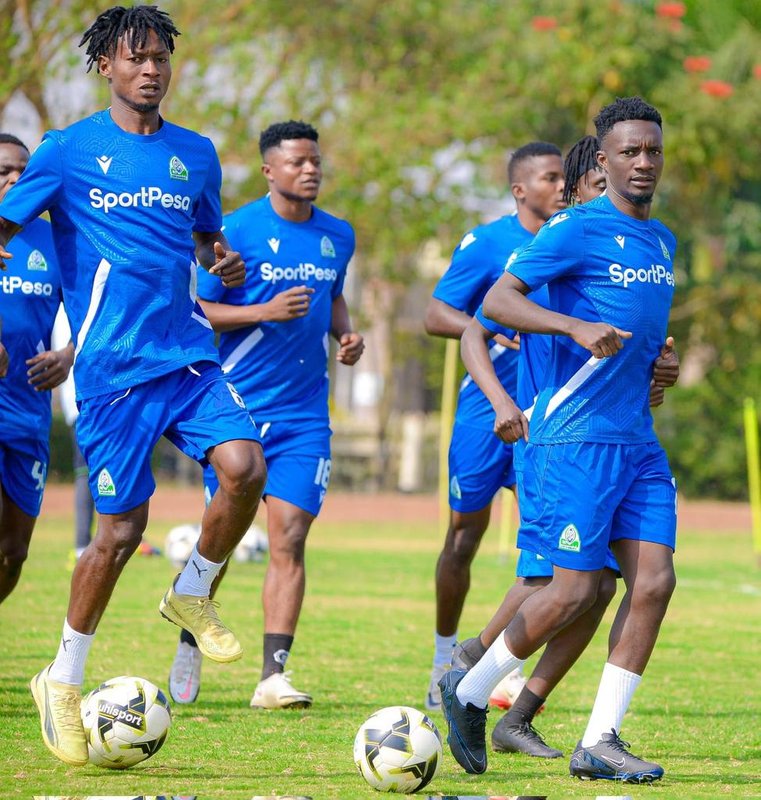
In the Kenyan Premier League, the script remains as predictable as a sunrise in the Rift Valley. As of February 5, 2026, Gor Mahia sits comfortably at the top of the table after twenty matches, having secured a gritty one to zero victory over Posta Rangers last weekend. The points gap between K’Ogalo and their nearest rivals, Tusker FC, has widened to seven points. While fans celebrate this dominance, it masks a systemic failure in the local game. The league is not getting more competitive, rather, it is consolidating around the only entities that can maintain a semblance of financial stability.
Gor Mahia’s success is less about a magical tactical evolution and more about their ability to maintain a squad while other teams face existential threats from unpaid salaries and crumbling sponsorships. AFC Leopards, the other traditional giant, currently occupies the sixth position, struggling with consistency and the weight of historical expectations that their current budget cannot support. The recent fixtures saw Ingwe draw blank against a resilient Bandari FC in Mombasa, a result that highlights the widening chasm between the top two and the rest of the pack.
The crisis of the FKF-PL is visible in the stands of the Nyayo National Stadium. Despite the proximity of the 2027 Africa Cup of Nations, the local league matches are played in front of cavernous, empty sections of concrete. The fans have realized that the result is often decided in the boardrooms months before the season starts. If a club cannot pay its travel expenses to Kakamega or Muhoroni, it cannot compete for the title. The league has become a survival of the richest, where the richness is relative to the absolute poverty of the grassroots structures. We are witnessing the slow death of provincial football as teams like Shabana FC struggle to keep their heads above water, currently hovering just three points above the relegation zone.
European Football: The Billion Dollar Stalemate
Moving to the European theaters, the English Premier League is currently locked in a three horse race that feels more like a struggle between different investment portfolios than different footballing philosophies. Manchester City, Arsenal, and Liverpool are separated by only four points at the top of the table following the mid week fixtures. Manchester City’s four to one demolition of Brentford on Monday night served as a reminder that their bench depth is more valuable than the starting eleven of most other clubs in the world.
The cynical reality of the Premier League in 2026 is that the tactical innovations of managers are secondary to the quality of the data scientists in the back office. Every movement is tracked, every calorie is counted, and every player is treated as a high performance asset rather than a human being. Arsenal’s recent two to zero win over Wolverhampton Wanderers showed a team that plays with the precision of a Swiss watch, but it lacks the soul of the game that older generations remember. The fluidity of the sport has been replaced by structured patterns of play designed to maximize the probability of a high value shot.
In the Champions League, which resumes its knockout stages later this month, the dominance of the traditional elite remains unchallenged. Real Madrid and Bayern Munich continue to use their historical prestige to vacuum up the best talent from smaller leagues, ensuring that the latter stages of the tournament remain an exclusive club for the wealthy. The supposed democratization of the game through new formats has only served to increase the number of matches, leading to player burnout and a diluted product. We are paying more to watch tired athletes perform in front of tourists who can afford the exorbitant ticket prices, while the local supporters are priced out of their own culture.
International Athletics: The High Tech Arms Race
International athletics is currently preparing for the World Indoor Championships, but the conversation remains dominated by the upcoming marathon season. The legacy of the late Kelvin Kiptum continues to loom large over the sport, but the focus has shifted toward the technological requirements for breaking the two hour barrier in a sanctioned race. Athletics is no longer just about the capacity of the human lungs and heart, it is about the carbon fiber plates in the soles of the shoes and the aerodynamic properties of the singlets.
Beatrice Chebet and Faith Kipyegon continue to dominate the middle and long distances, but their brilliance is often overshadowed by debates regarding shoe technology. In the most recent Diamond League meetings, the difference between gold and silver was often measured in the efficiency of the footwear rather than the grit of the runner. The world records being set in 2025 and early 2026 are impressive, but they come with an asterisk that points to the laboratory.
Kenya remains a powerhouse in these disciplines, yet the domestic infrastructure for these athletes is still lagging behind their international success. The irony of a world record holder training on a dirt track in Iten while the government talks about world class stadiums is not lost on the cynical observer. The athletes succeed in spite of the system, not because of it. Their victories are used by politicians for photo opportunities, but the investment into the next generation of runners remains sporadic and disorganized. We are witnessing a commercialization of human endurance where the athlete is the last person to benefit from the millions of dollars in sponsorship money flowing through the sport.
The Infrastructure Lie and the AFCON 2027 Mirage
Kenya is currently in a race against time to prepare for the 2027 Africa Cup of Nations, a project that is being sold as a transformative moment for the nation. However, if we look at the current state of construction at the Talanta Stadium and the renovations at Kasarani, the reality is far from the glossy architectural renders shared on social media. As of February 2026, several key projects are behind schedule, plagued by the usual suspects of bureaucratic delays and questions regarding the allocation of funds.
The belief that hosting a major tournament will automatically improve the state of local sports is a fallacy that has been debunked in numerous countries. Often, these stadiums become white elephants, monuments to a three week event that the local league cannot afford to maintain. The focus should be on community pitches and training academies, but there is no political capital in small, functional projects. The grandiosity of the AFCON project serves the egos of the elite while the average FKF-PL player continues to train on surfaces that are a hazard to their professional longevity.
We are told that these investments will create a legacy, but the legacy of past tournaments in other African nations has often been one of debt and decay. The cynical view is that the construction contracts are the primary goal, with the actual football being an afterthought. If the state of the pitch at a standard league game today is any indication, the players who will represent Kenya in 2027 are being underserved by the very system that claims to be building their future.
The Betting Culture and the Soul of the Fan
Perhaps the most damaging development in the last few years is the total integration of the betting industry into the fabric of sports. In Kenya, you cannot watch a match or listen to a sports broadcast without being bombarded by odds and promotional offers. The relationship between the fan and the team has been fundamentally altered. People no longer support a team for the love of the game, they support a result for the hope of a payout.
This has led to a toxic environment where players are harassed on social media not for their performance, but for ruining someone’s multi bet. The integrity of the game is constantly under threat, with several lower league matches in Kenya currently under investigation for suspicious betting patterns. When the financial incentive to lose is higher than the reward for winning, the spirit of competition evaporates. The sports betting companies have become the most significant financiers of the leagues, giving them an uncomfortable amount of influence over how the sports are governed and consumed.
The fans, meanwhile, are being harvested for data. Their loyalty is tracked and sold to advertisers, ensuring that even when they are not betting, they are being marketed to. The communal experience of the stadium is being replaced by the solitary experience of the smartphone screen, where every second of the match is a commodity to be traded. This is the ultimate victory of capital over sport, turning a shared cultural heritage into a series of individual transactions.
The Future of Fandom in an Age of Apathy
As we look toward the remainder of 2026, the trajectory of sports is clear. We will see more concentration of wealth in the hands of a few clubs and athletes, more technological intervention in performance, and a deeper reliance on the gambling industry to keep the lights on. The average fan is becoming increasingly cynical, sensing that the game they love is being stolen and sold back to them at a premium.
The FKF-PL will likely conclude with another Gor Mahia title, celebrated by a dwindling number of die hard supporters while the rest of the country watches the Premier League title race on their phones. The marathon runners will continue to shave seconds off their times, driven by the pressure of apparel contracts and the pursuit of synthetic