

-(10).jpg)
The AFCON 2027 Billion-Shilling Ghost: Why Ruto’s Stadium Promises Might Be Kenya’s Biggest Sports Scam
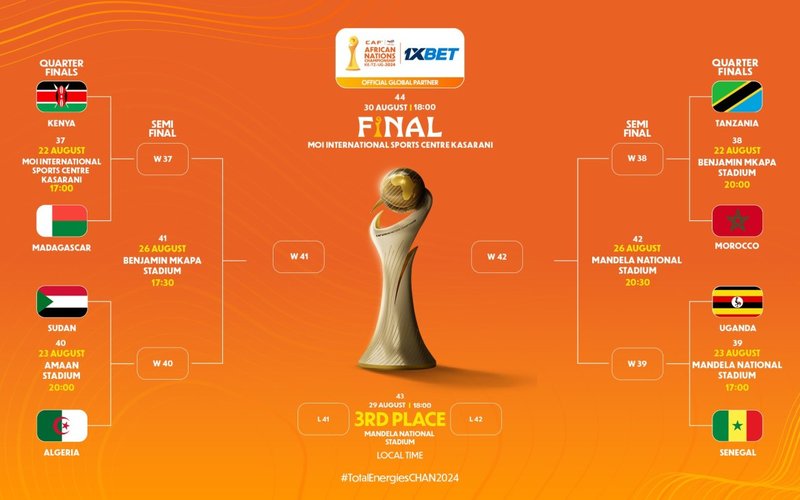
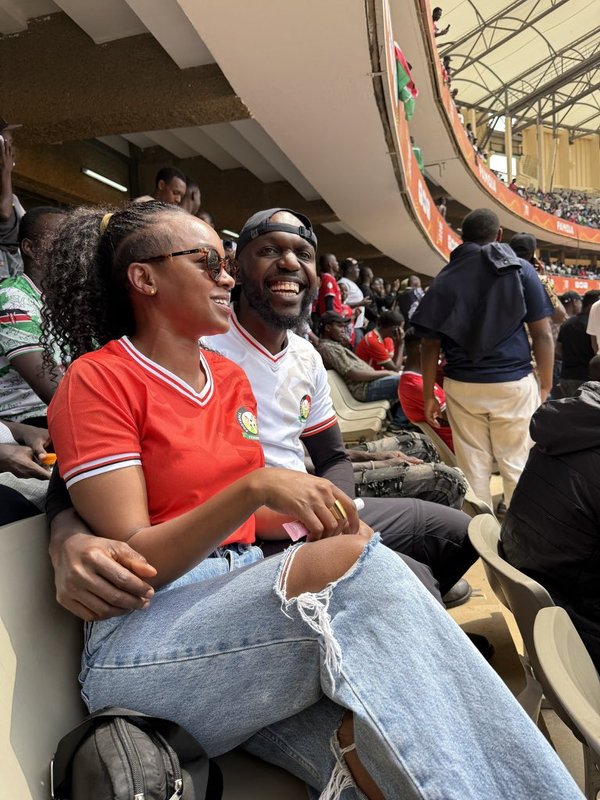
I walked into Talanta Stadium this January and I could not lie. What I saw was impressive. The concrete is rising, the bones of a 60,000-seater world-class venue are clearly there, and yes, the government was right when they said it is about 80 percent complete. I also caught a few CHAN matches at Kasarani during the tournament, and honestly, the stadium delivered. The energy, the Kenyan pride, the way fans sang and cheered for Harambee Stars. That part felt real and beautiful.
But here is the thing: being excited about AFCON 2027 and being angry about how we are being played does not have to be a contradiction. And right now, Kenyans should be both.
Because while our stadiums are being built and our tournament is coming, something deeply wrong is happening beneath the surface. Something that will haunt us long after the final whistle blows. It is not that the stadiums are fake. It is that the story we are being told about them might be the biggest financial con Kenya has seen in a generation.
The Math That Does Not Add Up
Let me hit you with the numbers that should make every Kenyan angry: Talanta Stadium is costing 144 billion shillings. One hundred and forty-four billion.
For comparison, Emirates Stadium in London. A 60,260 capacity world-class venue completed in 2006. It cost Arsenal Football Club 390 million pounds. That is roughly 66 billion shillings in today’s money. So Talanta, a stadium in Nairobi in 2025, is costing more than double what one of the world’s most prestigious football stadiums cost 20 years ago in one of the world’s most expensive cities.
Let that sink in.
The government borrowed 44.9 billion shillings through the Linzi 003 Infrastructure Asset-Backed Security bond in July 2025 to fund Talanta construction. But that is just the headline number. The real kicker? Kenyans are projected to pay roughly 100 billion shillings in interest on top of that 44.9 billion. So the final tab is not 44 billion. It is closer to 145 billion. And every shilling of that will come from your taxes, your school fees, your healthcare budget, and your roads.
For a stadium. In an election year.
When you ask hard questions about why the cost is nearly three times what Emirates cost, the government goes quiet. When you ask for a detailed breakdown of where the 144 billion is actually going. Land acquisition? Infrastructure? Construction? Contractor profits? Political markups? The answer is always: “It is public domain.”
Well, being “public domain” does not mean it makes sense. It just means it is hidden in plain sight.
CHAN 2024: A Preview of What AFCON Could Become
Here is what we learned from CHAN 2024 at Kasarani: hosting international football tournaments under a government that sees every event as a campaign rally is dangerous.
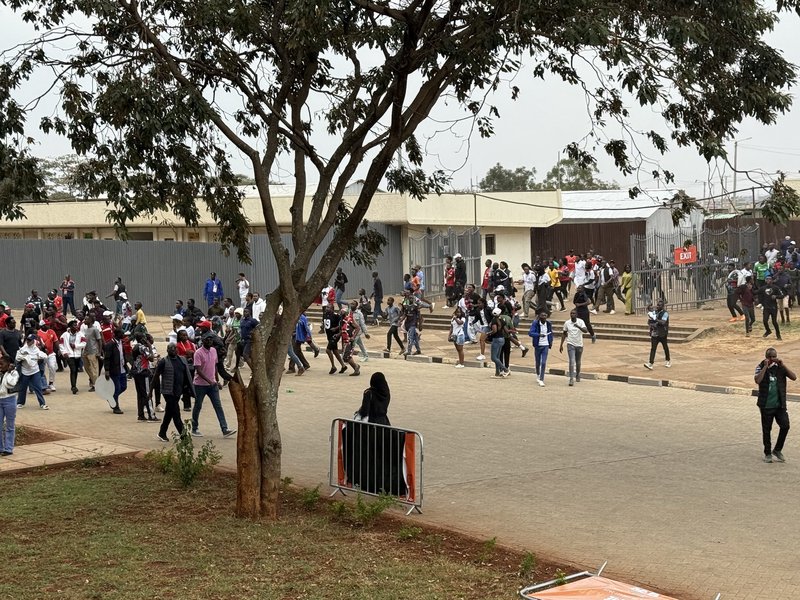
During the Kenya versus DR Congo match, something happened that made a lot of genuine football fans angry. Government politicians and their supporters bought tickets in bulk. Not to watch the game, but to pack the stadiums with party loyalists wearing government merchandise. These were not random supporters. They were goons, in the truest sense. Their job was not to cheer for Kenya. It was to make sure anti-government chants did not happen on live TV.
The vibe got killed. The authentic moment. When a nation comes together to support its team. It became a political rally. And genuine Kenyans who wanted to watch their national team? Locked out.
But it got worse.
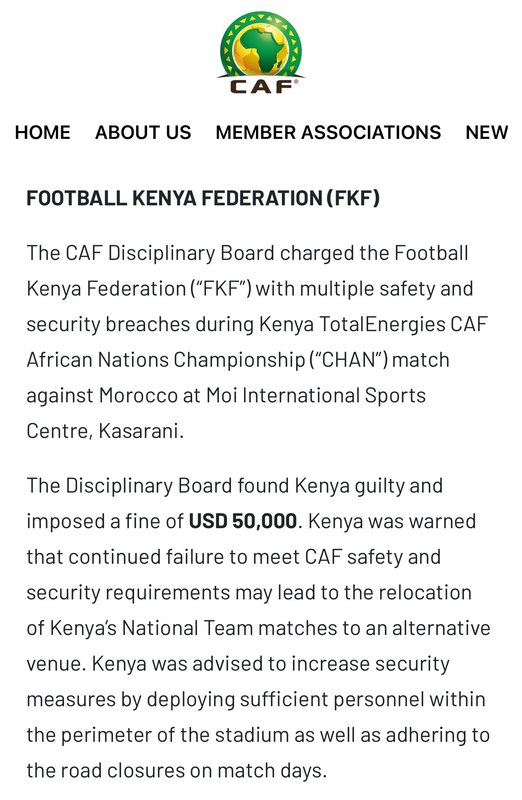
While politicians were hoarding tickets, a thriving fake ticket black market exploded outside Kasarani. Scammers were selling counterfeit passes to desperate fans for 300 to 1,000 shillings. Hundreds of people showed up with what they thought were valid tickets only to be turned away because their tickets had already been scanned. Sometimes to multiple people. When genuine fans got frustrated and tried to jump the fence to enter the stadium they had paid for, CAF saw chaos. The Football Kenya Federation got fined 2.5 million shillings by CAF for poor crowd control.
Think about that. We hosted an international tournament, and we could not even manage basic ticketing without scamming our own people.
Now imagine AFCON 2027, on a much bigger scale. More stadiums. More fans. More politicians desperate to use a global event for domestic political gain. And an election happening just months after the tournament ends. Meaning every match, every ceremony, and every crowd shot will be weaponized for political messaging.
The Election Year Weapon
Let us be direct: 2027 is a presidential election year, and Kenya’s elections are never neutral events. President Ruto is known for doing whatever it takes to consolidate power, and AFCON 2027 is the biggest stage he could ask for.
The opening ceremony will be broadcast globally. The final will be watched by millions. Every crowd shot, every flag, and every moment of national pride will be an opportunity for the government to wrap itself in the Kenyan flag and claim credit for the tournament’s success.
What happened at CHAN with politicians buying bulk tickets and filling stadiums with supporters instead of fans? That was a test run. That is what we should expect at AFCON, but amplified. Government goons at every match. Ticketing systems rigged to favor political loyalists. Anti-government chants pre-emptively shut down. The stadium becoming a campaign event instead of a football tournament.
And here is what infuriates me: Kenyans are genuinely excited about this tournament. We want it to be special. We want to host it well. But that genuine pride is being weaponized by a government that sees AFCON not as a gift to Kenyans, but as a four-week campaign commercial.
Where Are the Billions Really Going?
The absence of transparency around the Ruto sports budget is not accidental. It is intentional.
We know 144 billion shillings is being spent on Talanta Stadium. We know the government is also renovating Kasarani Stadium and Nyayo Stadium. We know construction is happening at multiple other venues across the country as part of the 25 stadiums Ruto promised. But beyond these headlines, we do not have:
- A detailed breakdown of costs per stadium
- Transparency on which contractors got which tenders and why
- Clear accounting of how much is going to land acquisition versus construction versus contingencies
- Any independent audit of spending
- A plan for post-tournament maintenance and sustainability
In Kenya’s recent history, this level of opacity has preceded massive corruption. The missing 44 billion shillings from E-citizen. The billions that vanished from various infrastructure projects. The billions in interest we pay on loans for projects that do not deliver.
When you combine massive spending plus lack of transparency plus an election year plus a government that has already shown willingness to use stadiums for political gain, you do not get a sports legacy. You get a ghost project. Massive on the surface, hollow underneath, and paid for by ordinary Kenyans who will be squeezed for decades through taxes and inflated government debt.
What Kenyans Need to Demand Right Now
This is not about being anti-AFCON or anti-stadium. This is about making sure our genuine excitement does not get stolen by politicians and contractors who profit while we pay the bill.
Here is what needs to happen before AFCON 2027:
1. Full Transparency on the 144 Billion
Every shilling of the Talanta Stadium budget needs to be broken down publicly. Land cost, construction cost, equipment, labor, contractor fees, everything. No more public domain vagueness. The breakdown should be auditable and open to citizen scrutiny.
2. Independent Audit
The Office of the Auditor General needs to conduct a full, real-time audit of all AFCON-related spending. Not after the tournament. Now. While money is still being spent. The audit report should be published monthly so Kenyans can see exactly where their money is going.
3. Citizen Oversight of Ticketing
After the CHAN 2024 fake ticket scandal, it is clear the current system cannot be trusted. Civil society organizations, fan groups, and transparency advocates need a formal seat at the table in designing the AFCON ticketing system. Tickets should be non-transferable, digitally verified, and sold directly to fans. There must be strict limits on government or politician bulk purchasing.
4. Anti-Political Measures for the Stadium
AFCON 2027 should have an explicit rule: no political merchandise, no government branding, and no campaign events inside the stadiums during the tournament. The stadiums belong to football and fans for those four weeks, not to politicians building their image. CAF should enforce this aggressively, with heavy fines for violations.
5. Post-Tournament Sustainability Plan
Before the first brick is laid, Kenyans need to see a detailed plan for what happens to these stadiums after August 2027. Who manages them? What events will keep them busy? How will maintenance be funded? Will local clubs and community groups have access? Or will they become white elephants. Monuments to political ego, slowly decaying, costing taxpayers millions in annual upkeep.
The Choice We Have
Kenya is genuinely excited about AFCON 2027. That excitement is real, and it is beautiful. We have a right to be proud that East Africa is hosting the continent’s biggest football tournament. We have a right to see world-class stadiums built in our country.
But we also have a responsibility to ourselves and to future generations to make sure this tournament does not become a cautionary tale about how a government spent 144 billion shillings, created a few gleaming stadiums, and left ordinary Kenyans holding a decade of debt.
The stadiums are being built. That part is real. But the bigger question is not whether Talanta will be ready by 2027. It will be. The question is whether we, as Kenyans, will demand to know exactly what we paid for it, who profited, and whether the game itself will be allowed to breathe or whether it will be suffocated by politics.
AFCON 2027 can be Kenya’s moment. But only if we stop being passive spectators to our own exploitation. Ask hard questions. Demand transparency. Insist on citizen oversight. Make noise about ticketing fraud. Watch what politicians do at these stadiums. And remember: our excitement is powerful, but it should not blind us to the billions being spent in the shadows.
The tournament will be world-class. The question is whether the governance of it will be.