
.jpg)

Martha Njoki And The Politics Of Rescue: Mercy, Optics, And Power Outside Nairobi City Hall
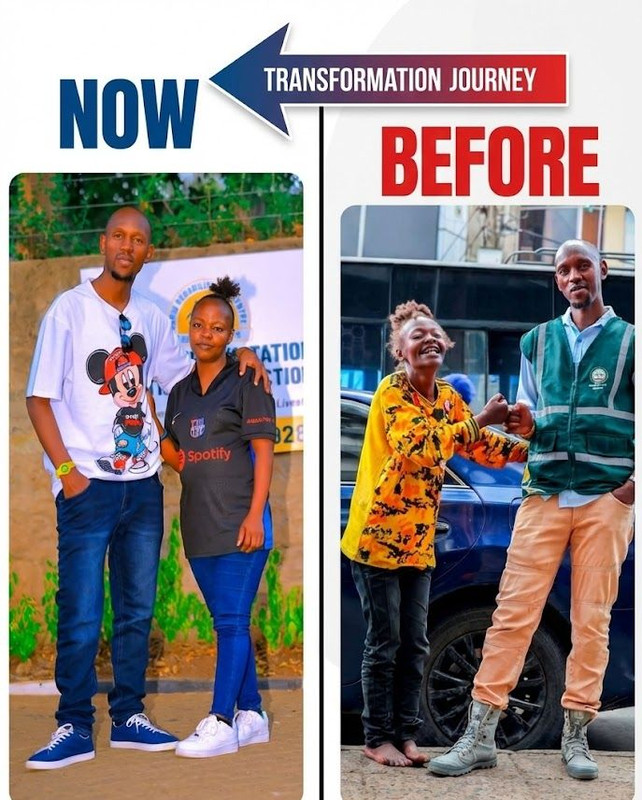
Martha Njoki’s story begins in the way so many Nairobi tragedies do, with a woman lost to the streets outside City Hall, her unkempt hair matted with dust from endless days under the open sky, her clothes hanging in tatters that barely concealed the toll of prolonged homelessness, and her eyes carrying that vacant, hollow stare that signals a soul long since surrendered to hopelessness.
Geoffrey Mosiria spotted her there weeks ago, the former Nairobi environment chief now serving as Chief Officer for Citizen Engagement, and without the flash of cameras or crowds, he pulled her from that abyss and delivered her to the Rapid Rehabilitation Centre for Addiction in Kahawa Sukari, where the slow, unglamorous work of reclamation quietly began.
From Pavement To Rehabilitation
On December 26, 2025, Mosiria went back to check on her progress. What he found looked like a different person. Photos he shared show a woman transformed beyond recognition, her hair now neatly styled, her body clothed in clean, well‑fitting clothes, and her face softened by a calm, quiet confidence that simply did not exist in the first images.
He captioned the visit in understated language, saying he was happy to report that she was “recovering very well,” and added that plans were underway to help her secure a job once she fully recovers and to reunite her with her family, who had lost contact with her for years. Details like her exact age, hometown, or the chain of events that dragged her to the street remain sketchy, stitched together from Facebook posts and news write‑ups rather than formal records.
Kenyans watching from afar did the rest. Comment sections filled with disbelief and praise, with people stunned at how quickly dignity can return when someone is simply given medical care, clean clothes, and a safe bed. For a population battered by constant bad news, Martha’s before‑and‑after photos felt like a rare, breathing proof that second chances are still possible.
Sonko’s Ghost In The Background
If this script feels familiar, it is because Nairobi has seen a version of it before. A decade ago, Mike Sonko pioneered his own brand of rescue politics through the Sonko Rescue Team, a privately funded operation stocked with ambulances, fire engines, water bowsers, and camera crews that followed every dramatic intervention from floods to funerals.
The team ferried the sick to hospital, collected bodies, cleaned estates, and picked street families off pavements, all while Sonko crafted the image of a gold‑plated savior of the forgotten, a move that helped propel him from MP to senator to governor. Yet behind the sirens and YouTube documentaries, Nairobi’s deeper problems persisted, and his tenure ultimately collapsed under corruption charges, mismanagement, and a city that remained stubbornly broken even after all the televised rescues.
That history hangs over every new act of mercy by any Nairobi politician. Genuine compassion now lives in the same room as public suspicion. Every camera angle raises the same question: is this about the victim, or the brand?
Mosiria’s Quieter Version Of Rescue
Mosiria’s style, at least for now, feels very different. There is no branded caravan tearing through town, no personalised ambulances, no gold chains or television crews in tow. Most of his rescues surface first as raw videos on his own social pages; a Kenyan‑Indian woman with diabetes who had lived on the streets for decades taken to hospital, a schoolboy called Mike shepherded through treatment and justice after a brutal assault, and now Martha Njoki’s rehabilitation in Kahawa Sukari.
Since his appointment in November 2025 as Chief Officer for Citizen Engagement and Customer Service, he has cast himself as a fixer for individual suffering and a combative voice against questionable deals, promising to link citizen complaints to action. In that context, Martha’s story fits a growing pattern; targeted interventions that do not always come with formal county programs behind them, but that leave visible human footprints.
Yet patterns are exactly what fuel political speculation. Each act of rescue adds to a narrative. Each viral success nudges his name further into public consciousness. In a city that has seen rescues convert into votes before, people naturally ask whether this is simply who he is, or the opening chapter of an organised campaign.
2027 And The Sonko Comparison
Whispers already circle around the idea of Mosiria vying for Nairobi senator in 2027, even though he has publicly brushed off such talk and insisted that he is focused on environmental and citizen engagement work. The comparison to Sonko feels almost automatic; both men built visibility by meeting people at their lowest point, both styled themselves as practical fixers where bureaucracies had failed, and both understood, or understand, the emotional power of “I came for you when no one else did.”
The crucial difference so far lies in volume and spectacle. Sonko turned his rescues into a full‑time brand, complete with uniforms and music. Mosiria’s interventions, at least up to Martha’s case, have been framed as sporadic responses driven by personal conscience rather than a standing parallel institution to the county government. Whether that difference holds as his profile grows is the test that lies ahead.
Because if history is any guide, Nairobi is perfectly capable of turning a rescuer into a kingmaker, then watching in horror as the throne rots beneath him.
What Martha’s Story Reveals About The System
For all the hope in Martha’s transformation, her journey also exposes how fragile the wider system remains. Kenya’s homelessness and addiction crises are not news; rehabilitation centres are chronically underfunded, slots are limited, and most people on the streets never meet a politician with the power to fast‑track them into structured care.
Faith‑based and community organisations have spent decades pulling children and adults from drains and doorways, running small centres that teach basic life skills, offer counseling, and slowly reintegrate people with their families. They regularly point out that the root problems are demolition, poverty, family breakdown, and the absence of social safety nets, not merely individual bad choices. Martha’s new beginning, beautiful as it is, sits on top of a mountain of other Marthas and Mikes who will never trend.
Her case proves what targeted compassion can do. It also quietly admits what the state has failed to build: a predictable, accessible path from street to recovery that does not depend on being noticed by a senior official scrolling past you in traffic.
Mercy, Optics, And The Question We Cannot Avoid
In the end, Martha Njoki’s story is both a miracle and a mirror. It is a miracle because very few people come back from that far down; in the first set of photos she looked finished, in the latest she looks like someone about to start again. It is a mirror because it forces Nairobi to look at itself, at who gets saved, who gets ignored, and who gets to turn saving into a platform.
Sonko’s era taught the city that rescue can be both sincere and politically useful, that the same hand that lifts you from the gutter can sign off on budgets that keep others there. Mosiria’s path is still being written. His next choices will decide whether he becomes the exception to that pattern or its next chapter.
Next time you pass another shadow outside City Hall, remember Martha Njoki, not only as a woman recovered from the brink, but as a question hanging over everyone who claims to care: is this kindness offered for its own sake, or the opening move in a much larger game?