.jpg)
)
Ruto’s 2027 Problem: Why Kenya’s President Faces Historic Electoral Backlash
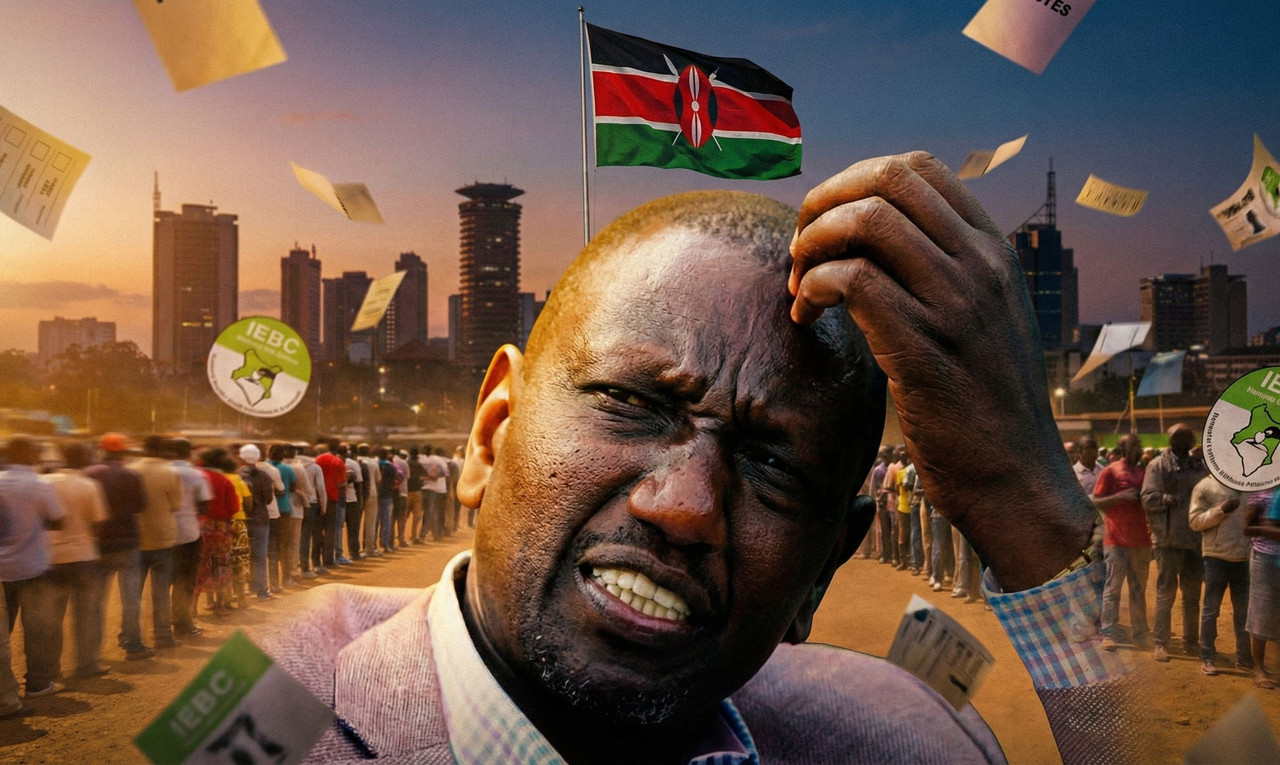
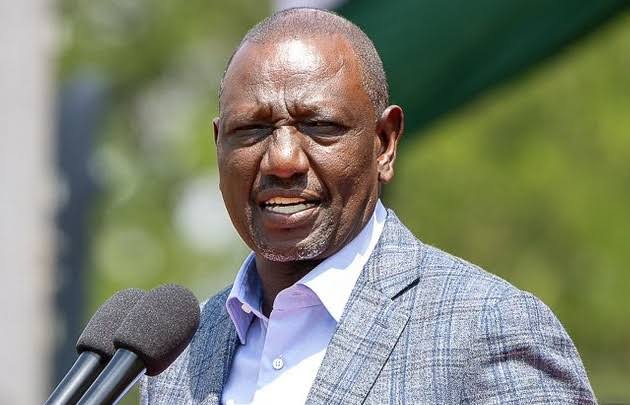
The polls say Ruto is cruising to a comfortable second term. But walk through Nairobi’s tech hubs, sit in Kikuyu matatus, scroll through Twitter and TikTok, or attend a funeral in Luhya country, and you’ll hear a completely different Kenya. The opinion numbers claiming Ruto at 28 percent are starting to feel like propaganda designed to soften the ground psychologically for a contested victory, because the ground game tells a messier, darker story. Raila’s death in October removed the unifying opposition figure, but it also unleashed forces Ruto never truly controlled. ODM is shattered, the mountain is in open revolt, Gen Z has learned that streets beat ballots, and whispers of poll manipulation are becoming roars.
The Raila Death That Broke ODM Forever
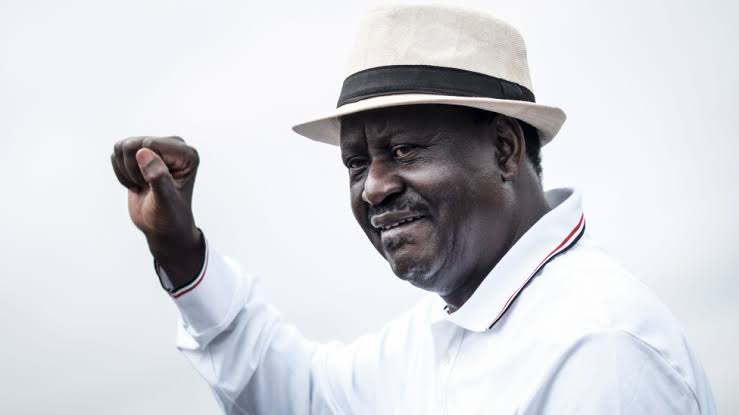
When Raila Odinga collapsed in India on October 15, 2025, the opposition lost more than an icon. ODM imploded from the inside. Raila was the human superglue holding together radically incompatible camps: the old guard defending cooperation with Ruto’s government, the militant youth demanding zero collaboration, and ambitious mid-tier leaders eyeing his throne. The moment he died, those camps stopped pretending to agree.
By November, when Dr. Oburu Oginga took over as party leader, ODM had splintered into at least three warring factions. The pro-government wing, anchored by Mining Cabinet Secretary Hassan Joho and Homa Bay Governor Gladys Wanga, wanted to deepen ties with Ruto. The opposition hardliners, led by Secretary General Edwin Sifuna, demanded ODM become the firewall against tyranny. A pragmatic middle ground tried to hold the line, but cracks widened daily. Lawyer Harrison Kinyanjui told the nation what insiders already knew: ODM as a unified force was finished. “Raila, who was the glue that held them together, is no longer there, and everyone is now scrambling for their own political space.”
You can feel this fracture at every gathering. During Cyrus Jirongo’s burial in Lumakanda on December 30, Luhya leaders spoke truths the government hoped to bury. Vihiga Senator Godfrey Osotsi called out threats being leveled at those demanding investigations into Jirongo’s fatal crash, and ODM’s Sifuna made a stunning admission: Jirongo will not get justice despite public outcry. That wasn’t just grief talking. It was a confession that ODM leadership no longer has the spine to challenge state narratives when their own people die under suspicious circumstances. Kabuchai MP Majimbo Kalasinga refused to attend the burial altogether, declaring: “I will not attend Jirongo’s burial because we are burying the truth.” When opposition MPs skip funerals to protest cover-ups, you’re watching a party implode.
The Polls That Smell Like Strategy
Here’s where things get truly troubling. The latest Infotrak poll released December 27 shows Ruto at 28 percent, a jump from 19 percent in September 2024. Suddenly Ruto is the frontrunner, presidential chances restored, election narrative reset. But the polling methodology stinks, and the timing is suspicious.
Infotrak surveyed just one thousand Kenyans via telephone calls on December 19 and 20. That’s a margin of error of plus or minus 3.1 percent, meaning Ruto could actually be anywhere from 24.9 to 31.1 percent. The sample is thin for a country of fifty-two million. Yet this one poll gets blasted across media, and UDA communications machinery immediately weaponizes it, claiming vindication.
Meanwhile, where’s the TIFA Research data showing fifty percent of Kenyans have zero confidence in the 2027 election’s integrity? That number, released earlier, vanished from the conversation. Why? Because it’s the real story. Half of Kenya thinks the vote will be stolen before a single ballot is cast. Infotrak asks clean questions that yield clean numbers. TIFA asks voters if they believe democracy will function, and Kenyans laugh bitterly.
The timing of the Infotrak surge feels choreographed. It arrives just as Gen Z momentum dies down, just as ODM crumbles, just as opposition spirits flag. It’s not propaganda in the crude sense; it’s strategic polling designed to demoralize opponents and create a self-fulfilling narrative of inevitability. When people believe Ruto has already won, fewer show up to vote for alternatives. Polls become prisons.
UDA’s By-Election Victories: Warning Signs Everyone Ignores
On November 27, the United Democratic Alliance claimed twelve seats in by-elections held across the country. UDA’s Secretary General Hassan Omar crowed about it as proof of Ruto’s national popularity. But you have to look closer at the actual numbers, because they reveal something darker: voter suppression and narrow margins disguised as mandate.
In Malava, UDA’s David Ndakwa won with just 21,564 votes against DAP-K’s Seth Panyako, who got 20,210. A lead of 1,354 votes. The race was so tight that Cleophas Malala, the loser’s party mate, demanded a re-tally. In Mbeere North, UDA’s Leonard Muthende squeaked by with 15,802 votes versus Newton Karish’s 15,308. A difference of 494 votes. The Returning Officer himself noted the race was marred by massive voter bribery, chaotic scenes, and each side accusing the other of violence.
These aren’t victories. These are stolen goods dressed up as wins. A government that has to deploy state resources, security apparatus, and cash-on-the-ground intimidation to win by hundreds of votes in rural constituencies is a government terrified of fair contests. Yet media treated them as evidence of strength.
Rigathi Gachagua watched these by-elections closely, and they confirmed his suspicions. The mountain’s votes were suppressed. In Mbeere North, UDA faced an internal clan revolt, with pro-government candidates losing core constituencies to the opposition. Gachagua realized that Ruto was willing to fragment his own coalition to win narrow seats, which means come 2027, there’s no unified base, just fractured strongholds held together by coercion.
The Mountain Revolts: Gachagua’s Open War
On December 8, at Herbert Kariithi Macharia’s funeral in Murang’a, Rigathi Gachagua delivered an ultimatum that shocked State House. He stood before United Opposition co-principals Kalonzo Musyoka and Eugene Wamalwa and declared war on behalf of Mt. Kenya. “The mountain has decided that its votes will go into one basket,” he said. He promised seven million votes for Kalonzo, not Ruto.
This is seismic. Mt. Kenya gave Ruto 7.1 million votes in 2022. Gachagua is now explicitly telling the mountain to abandon the man who impeached him, to unite behind an opposition coalition, and to reject UDA’s mountain candidates entirely. When he said Ruto-backed candidates would collect only 50,000 votes from a region that gave him millions, he wasn’t speculating. He was reading ground sentiment with precision.
The mountain’s grievance is simple: Ruto promised development and delivered betrayal. Gachagua’s impeachment signaled to Central Kenya voters that Ruto would turn on his own the moment they challenge him. That’s not a rallying cry; that’s a reason to defect. Gachagua told voters online agitators pretending to be in the opposition were “lost” and didn’t understand the mountain. But he said the mountain itself had already decided it would vote against Ruto, pending which opposition figure could consolidate backing.
This matters because Central Kenya is where 2027 gets decided. If the mountain unites behind Kalonzo or Maraga, Ruto loses. If it splits, he might still win on a low mountain turnout plus northern vote consolidation. Gachagua is trying to force unity, but the very fact he has to work so hard to keep the mountain unified tells you how fragile Ruto’s coalition actually is.
Maraga’s Shadow: The Integrity Card
Former Chief Justice David Maraga entered the race in October as the United Green Movement’s presidential candidate. On the surface, Maraga looks unelectable: zero political experience, no voter machinery, a party nobody’s heard of. But he represents something Ruto cannot: moral authority and the institutional credibility to demand election integrity.
Gen Z doesn’t rally behind Maraga because he’ll transform the economy. They rally behind him because he once stood up to power from the Supreme Court bench. He told Ruto directly during one interview that the president was using resources meant for the people to enrich himself, and that the government’s talk of elongating presidential terms was a red flag. When Maraga says these things, younger Kenyans who participated in June 2024 protests feel seen.
The Maraga card is the anti-regime vote, not the pro-alternative vote. In a choice between Ruto and anybody with integrity, Gen Z picks anybody. Maraga’s weakness as a candidate is also his strength: he has no baggage in parliament, no corruption allegations, no regional base he’ll betray. He’s a vessel for the demand that Kenya be governed by law, not by whim.
Gen Z: The Electorate That Lives in Bullets and TikTok
When the police fired on Gen Z protesters storming Parliament in June 2024, something fundamental broke. Kenyans under thirty-five learned that voting can be ignored, that petitions can be dismissed, that the state will shoot you for demanding change. That knowledge doesn’t evaporate because Raila died or because Infotrak released a poll.
Gen Z mobilizes on TikTok, Instagram, and meme culture, completely bypassing traditional political hierarchies. They don’t wait for party directives to protest. They don’t believe polling numbers because they’ve already decided politicians don’t listen. They’re the demographic that makes election legitimacy impossible if they’re sufficiently alienated.
Ruto’s government has tried to manage Gen Z through both repression and the occasional listening tour. Neither works. Repression hardens their rage. Listening tours feel patronizing when the economy remains crushed and unemployment persists. By 2027, if Gen Z turnout is strong and unified, they could tip several urban and semi-urban constituencies away from UDA. If they stay home, the numbers compress and Ruto wins among older, rural voters.
The government’s heavy-handed crackdowns scare away investors and tourists while terrifying a generation that’s learned power responds to streets, not ballots. Political analysts already note Ruto could become a one-term president unless he addresses youth grievances meaningfully. He hasn’t. That’s the calculation that should terrify him, yet the Infotrak poll suggests the opposite.
The Unopposed Narrative Versus Ground Reality
On the surface, it looks simple: Raila is dead, ODM is fractured, Gachagua is isolated, Maraga has no structure, Gen Z is traumatized, UDA won close by-elections, opinion polls show Ruto ahead. Therefore Ruto wins in 2027, probably with a low plurality.
But ground reality is far more volatile. The opposition is broken but still more unified than Ruto’s coalition is comfortable with. Mt. Kenya’s defection alone could swing the presidency. An opposition that consolidates around Kalonzo plus Gachagua’s mountain support plus Maraga’s Gen Z edge plus Wamalwa’s Western Kenya would pose a genuine threat, especially if turnout is strong.
The polls showing Ruto at 28 percent are meant to freeze this scenario before it develops. If Kenyans believe the presidency is already decided, they won’t organize. Opposition candidates won’t fundraise effectively. Media won’t scrutinize UDA aggressively. The victory becomes self-fulfilling.
But polling can be wrong, especially when the underlying political ground is this fractured and when half the country doesn’t believe the election will be fair anyway. Ruto’s 2027 problem isn’t that he’s weak relative to any single opponent. It’s that he’s weak relative to everything combined: a dead unifying figure who fragmented the opposition into pieces he now has to reassemble, a betrayed deputy president rallying a crucial voting bloc, an integrity-driven former judge offering Gen Z a non-corrupt option, and a generation of young Kenyans who’ve already decided the system doesn’t represent them.
The by-election wins are warnings that violence and coercion can deliver narrow victories. But narrow victories build no legitimacy, and 2027 will demand legitimacy or face chaos. Ruto’s polls are manufacturing permission for a president who’s actually running out of time.